
Talking with an aging parent about moving to a nursing home can bring up strong emotions for everyone involved. Your parent may fear losing independence, privacy, familiar routines, or the home where they built a life. You may feel worried about their safety while also wondering whether you are making the right choice.
The most important thing to remember is that this is rarely a one-and-done conversation. Your parent may need time to process the idea, grieve what is changing, ask questions, and gradually warm up to new possibilities. A calm, ongoing discussion can help them feel heard and included instead of pressured.
The strategies and sample scripts below can serve as a roadmap. However, every family is different, and you know your parent best. Adapt your approach to their personality, communication style, values, and current needs.
Start the Conversation Before a Crisis
Whenever possible, begin talking about future care before an emergency forces the family to make a quick decision. A fall, hospitalization, medication error, or caregiver crisis can limit your options and make the transition more stressful.
Choose a quiet time when everyone is rested and there are few distractions. Avoid starting the conversation during an argument, immediately after an upsetting incident, or at a large family gathering.
You might begin with:
“I want to understand what matters most to you if you ever need more help. Can we talk about what you would want your care to look like?”
This approach opens a discussion instead of announcing a decision.
Make It a Series of Conversations
Your parent may not be ready to agree, make plans, or even discuss the subject the first time it comes up. That does not mean the conversation failed.
Listen to their concerns, acknowledge their feelings, and allow space before returning to the topic. Several shorter conversations may be more productive than one long and emotionally exhausting discussion.
You could say:
“You do not have to decide anything today. I wanted to start talking so we can understand the options together.”
If the discussion becomes tense, pause it respectfully:
“I can see this is upsetting. Let’s take a break and talk again when we both feel ready.”
Giving your parent time to process the possibility shows respect and may reduce defensiveness.
Lead With Concern, Not Control
Focus on specific needs and changes you have noticed rather than your parent’s age or what you think they can no longer do. Statements such as “You cannot live alone anymore” can sound accusatory and may cause them to shut down.
Instead, use “I” statements and concrete examples:
“I have noticed that the stairs have become harder to manage, and I worry about you falling when no one is here.”
“I know staying independent is important to you. I would like us to look at options that could give you more support while helping you stay active.”
Keep the conversation centered on shared goals, such as safety, comfort, independence, social connection, and access to care.
Ask Questions and Listen Carefully
Before offering solutions, learn what your parent fears and what they want to preserve. Their biggest concern may not be the move itself. They may be worried about leaving a pet, losing contact with friends, sharing a room, managing costs, or giving up a favorite routine.
Helpful questions include:
“What worries you most about getting more help?”
“What would help a new place feel comfortable or familiar?”
“Which daily routines are most important to you?”
“What would you want us to look for in a nursing home?”
“Would you be willing to tour a few places without making a commitment?”
Listen without immediately correcting their assumptions. Once you understand the real concern, you can look for options that address it.
Offer Choices Whenever Possible
A move can feel like a loss of control. Meaningful choices can help your parent remain involved in their own life.
Depending on the situation, invite them to:
Help compare communities and schedule tours
Choose which family members participate in discussions
Ask questions about meals, activities, therapy, transportation, and visiting
Decide which furniture, photographs, and personal items to bring
Visit for a meal or activity before making a decision
Speak directly with staff or current residents
Try framing a tour as information gathering:
“We do not have to choose anything today. Let’s visit two communities and see what you like and do not like about each one.”
Involve a Trusted Third Party
Sometimes a parent can hear the same concern more openly from someone outside the immediate family. With your parent’s permission, consider involving their physician, a social worker, care manager, therapist, faith leader, or trusted friend.
A professional can help explain current care needs, discuss available levels of support, and keep the conversation focused on safety and quality of life. Their role should be to provide perspective, not to overwhelm or pressure your parent.
Talk About the Benefits Without Dismissing the Loss
It is reasonable to discuss the benefits of nursing home care, including 24-hour support, medication management, rehabilitation, meals, activities, and opportunities for social connection. At the same time, avoid making the move sound easy or entirely positive.
Your parent may be grieving their home, routines, community, and sense of independence. Acknowledge that loss honestly:
“I know leaving your home would be a major change. It makes sense that you feel sad and uncertain. We will take this one step at a time, and I will stay involved throughout the process.”
Reassurance is most meaningful when it includes a plan. Explain how often you will visit or call, which belongings can come with them, and how the family will help them maintain important relationships and routines.
What If Your Parent Has Dementia?
A dementia diagnosis does not automatically mean a person cannot participate in decisions. In earlier stages, your parent may still be able to express preferences, compare options, and make informed choices. Include them as much as possible, use clear language, discuss one idea at a time, and choose the time of day when they are usually most alert.
If memory loss or confusion makes it difficult for your parent to understand the decision, remember information, weigh the options, or communicate a consistent choice, contact their physician. The physician can evaluate cognitive changes, look for medical issues that may be worsening confusion, discuss safety concerns, and help determine whether a more formal assessment is needed. Decision-making ability can depend on the specific decision and may change over time.
Before acting on your parent’s behalf, review any advance directive, health care power of attorney, guardianship document, or other legal paperwork. Laws and authority vary by state, so an elder law attorney may be helpful if responsibilities are unclear. If your parent still has decision-making capacity, involve them in future care and legal planning as early as possible.
When your parent cannot fully participate, continue to protect their dignity. Use what you know about their past wishes, values, routines, relationships, culture, and definition of quality of life. Even if they cannot make the final decision, they may still be able to express preferences about food, surroundings, daily activities, or who provides care.
You might use simple, reassuring language such as:
“We are going to a place where people can help you with your medications and meals. I will be with you, and we will bring your favorite things.”
Avoid arguing over details your parent cannot process or repeatedly reminding them of painful information if doing so causes distress. Ask the physician or dementia care team for communication strategies suited to your parent’s condition.
When Safety Cannot Wait
Although a gradual approach is ideal, some situations require immediate help. Contact a health care professional promptly if your parent is wandering, repeatedly falling, missing essential medications, leaving appliances on, becoming unable to meet basic needs, or living in conditions that place them or others in danger.
If there is an immediate threat to anyone’s safety, call 911. A physician, hospital social worker, or local aging-services agency can help your family assess the situation and identify appropriate care options.
Moving Forward Together
There is no perfect script for talking with a parent about nursing home care. Aim for an honest, respectful process rather than a flawless conversation. Start early, listen more than you speak, return to the subject over time, and involve your parent in every decision they are able to make.
For many families, choosing a nursing home is not about taking independence away. It is about finding the right level of support so a loved one can be safer, receive needed care, and continue experiencing connection and purpose.
If your family is beginning this conversation, our team is here to answer questions, explain care options, and help you understand what to look for in a nursing home. Contact us to learn more or schedule a tour.
Contact Sprenger Health Care Systems for additional help.
Sources:
National Institute on Aging: Advance Care Planning
National Institute on Aging: Assessing Cognitive Impairment in Older Patients
Alzheimer’s Association: Legal Planning
Alzheimer’s Association: Dementia Care Practice Recommendations
This article provides general information and is not a substitute for medical or legal advice. Consult qualified professionals about your family’s circumstances.
2025 Employees of the YearAt Sprenger Health Care Systems, excellence is driven by people, people who show up every day with purpose, compassion, and pride in the work they do. Across our communities, services, and corporate teams, our employees make a meaningful difference in the lives of those we serve.
Each year, the Employee of the Year recognition celebrates individuals who consistently exemplify Sprenger’s mission, values, and commitment to excellence. It is with great pride that we recognize and celebrate the following team members for their outstanding contributions:
A Year of Dedication and Excellence
Throughout 2025, these team members consistently demonstrated an exceptional level of dedication, professionalism, and commitment to those we serve. In a year that required adaptability, resilience, and teamwork, each honoree rose to the occasion, going above and beyond their daily responsibilities to support residents, patients, families, and coworkers.
The Employee of the Year distinction is not given lightly. Honorees were selected based on specific criteria, including quality of care or service, dependability, teamwork, leadership, and alignment with Sprenger Health Care Systems’ core values. Everyone recognized here exemplified these standards throughout the year and made a measurable, positive impact within their role.
As part of this recognition, Employees of the Year and the Department Head of the Year will be formally celebrated by the Sprenger Health Care Systems executive team. This celebration serves as a meaningful expression of our appreciation and respect for their hard work and dedication.
2025 Employees of the Year
Michele Kieffer
Medical Records | Autumn Aegis
Jewell Mincy
CNA | Anchor Lodge
Steve Good
LPN | Amherst Manor
Sharon Fife
Housekeeping | Elms Retirement Village
Brooke Dabkowski
COTA | Sprenger Health Care Bluffton
Sheila Morgan
Receptionist | Grande Village
Alyssa Thompson
RN | Heather Knoll
Danielle Chaplin
CNA | Sprenger Health Care Port Royal
Kimberly Collin
Activities Assistant | Rose Lane
Adreonna Neely
RN | Towne Center
Jack George
Transportation | Smithville Western
Sonia Santiago
Housekeeping Aide | Village of the Falls
Linda Hruz
Receptionist | Silver Maple Recovery – Lorain
Talisha Robinson
Cook | Silver Maple Recovery – Massillon
Kristina Heine
Home Health Office Manager | Wellspring Homecare and Hospice
Crystal Geary
Activities Director | The 1907 at Central School
Jim Martin
Lawn Care Director | Corporate
Department Head of the Year
Mike Bellino
Director of Rehabilitation | Sprenger Health Care Bluffton & Port Royal
Thank You for Making a Difference
We are proud to honor this exceptional group of professionals who represent the very best of Sprenger Health Care Systems. Their dedication, teamwork, and commitment to high-quality care elevate our organization and strengthen the communities we serve.
To our Employees of the Year and Department Head of the Year, thank you for your leadership, your service, and the positive impact you make every day. Your contributions do not go unnoticed, and we are grateful to celebrate you.
Rocking the Ranking Heather Knoll Celebrates with Billy MorrisAt Heather Knoll Nursing and Rehabilitation Center in Tallmadge, Ohio, creating meaningful moments is part of everyday life. Recently, residents and staff came together for a special on-site celebration featuring live music, great food, and a strong sense of community, highlighted by a visit from Cleveland musician Billy Morris.
The event served as a thank-you to the Heather Knoll team and residents while also recognizing a milestone for the community: Heather Knoll’s recent ranking as #11 in the State of Ohio on Newsweek’s 2026 America’s Best Nursing Homes list.
A Familiar Sound, A Special Guest
Live music is a regular part of life at Heather Knoll, supporting engagement, connection, and enjoyment for residents, but this event carried special meaning as residents were thrilled to have a real rock star perform songs from their younger years. Many visibly engaged, smiling, and even teary-eyed as familiar favorites brought back cherished memories. Billy Morris’ performance for residents and staff added local pride and energy to the celebration. Staff were treated to Smokin’ Rock n’ Roll, the BBQ food truck Morris founded in 2014, known for its bold barbecue flavors and Cleveland rock culture.
Billy Morris is a longtime guitarist with a career that includes playing with Warrant, Quiet Riot, TUFF, and the Billy Morris Band, along with producing and recording multiple albums. He continues to perform across Northeast Ohio with the popular cover band Sunset Strip, known for its strong Cleveland following. His visit added a personal, hometown connection that resonated throughout the community.
A Community That Celebrates Together
While the music and food set a celebratory tone, the true focus of the event remained the people of Heather Knoll. Their daily dedication is reflected in the Newsweek ranking that evaluates nursing homes on quality measures, clinical performance, and resident satisfaction. Standing out among more than 15,000 nursing homes nationwide highlights the team’s commitment to compassionate, safe, and individualized care. An experience residents and families feel every day. At Sprenger Health Care Systems, we believe exceptional senior care also includes moments of connection, appreciation, and joy, and celebrations like this strengthen community bonds while honoring milestones both big and small.
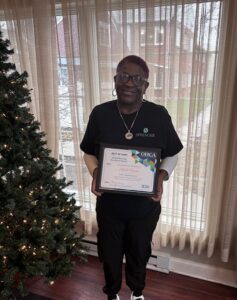
Sheila Moore Recognized for Skilled Nursing Excellence in OhioAnchor Lodge and Sprenger Health Care Systems are proud to recognize Sheila Moore, who was recently named a Best in Ohio recipient of the Skilled Nursing Excellence Awards by the Ohio Health Care Association (OHCA).
This year, more than 200 nominations were submitted across the state, with only seven individuals selected for this honor. Sheila’s recognition reflects both her professional excellence and the lasting impact she has made in skilled nursing.
With over 25 years at Anchor Lodge, Sheila has been a steady, trusted presence for residents, families, and team members alike. Her commitment to high-quality care and her leadership within the community continue to set a standard for excellence.
We are incredibly proud to have Sheila represent Anchor Lodge and Sprenger Health Care Systems on a statewide level. Her achievement highlights the dedication and expertise found within our teams every day.
Congratulations, Sheila, on this well-earned recognition.
Sprenger Health Care Port Royal in Port Royal, South Carolina, has had an extraordinary year—earning multiple honors that reflect the dedication and excellence of its team. The community proudly received Gold for Best Assisted Living Facility and Bronze for Best Nursing Home in the 2025 Lowcountry’s Best Awards. They were also named a 2025 Bronze National Quality Award recipient by the American Health Care Association/National Center for Assisted Living (AHCA/NCAL).
About Sprenger Health Care
Sprenger Health Care Systems is a family-owned organization with more than a century of experience in senior care. Known for its commitment to personalized, high-quality service, Sprenger creates communities where residents are treated like family and care evolves with their needs.
About Port Royal
Port Royal is proud to be one of the region’s only true Continuing Care Retirement Communities (CCRCs), offering both Assisted Living and Nursing Home care on one campus. This model allows residents to age in place with comfort, consistency, and peace of mind—eliminating the stress of relocating as care needs change.
The Assisted Living community features 45 private suites, 24/7 assistance, individualized care plans, and access to on-site therapy, dietary guidance from a licensed dietitian, and regular visits from a primary care physician and nurse practitioner. Amenities include a secured courtyard, putting green, library, salon, café, and a lively bar and pub area that seats up to 60 guests, including 10 stools at the main bar. A playground for visiting grandchildren adds a special touch, helping foster meaningful connections across generations.
Other Benefits of Sprenger Health Care
Sprenger Health Care Port Royal is also a contracted provider with the U.S. Department of Veterans Affairs through the VA Community Care Network (VCA). Through this partnership, eligible veterans can receive fully covered skilled nursing, rehabilitative, long-term, or respite care when authorized by the VA. The on-site team works closely with VA case managers to coordinate services and ensure veterans receive high-quality care close to home.
The community’s continued excellence is further reflected in its deficiency-free annual surveys from the Centers for Medicare & Medicaid Services (CMS) for two consecutive years, a 5-star overall CMS rating, and a Top 10 state ranking for quality measures. These accomplishments showcase the team’s steadfast commitment to superior care, compliance, and compassion.
Every achievement at Sprenger Health Care Port Royal is the result of teamwork and dedication. From caregivers and therapists to hospitality and support staff, each person contributes to an environment centered on dignity, respect, and personalized attention.
Receiving multiple honors in the same year—including recognition from both Lowcountry’s Best and the AHCA/NCAL—reflects not only Port Royal’s outstanding standards but also the trust placed in the Sprenger name by residents, families, and the wider community.