
Life can change in a moment’s time. For Austin, that moment led to a life-changing accident. Only being in his 30s, Austin had a tree fall on him after it fell the wrong way while cutting it down. Against all odds, Austin survived, but this accident left him with multiple serious injuries and a long hospital stay. After several surgeries, Austin was stable enough to begin rehabilitation. Austin’s condition was severe when he arrived at Rose Lane. He was unable to walk, reposition, or complete simple movements on his own. Reflecting on the early days of recovery, Austin shared “I wasn’t able to walk at all, move. I couldn’t turn over, nothing.” Being a younger adult, Austin had a pretty hard time with this condition.
From the Ground Up
When Austin first started, he required total assistance for mobility and relied on specialized equipment just to be able to safely transfer. He needed full support from his care team to transfer into his wheelchair. Austin’s goal was very clear from the moment he arrived: he wanted to walk again and return home. He shared that there were moments when he was convinced; he may never be able to leave. His determination to walk was his driving force to keep pushing him through even his toughest moments.
The Team Makes a Difference
Leaning on the support team helped Austin throughout his recovery substantially. He shared that his therapy team was always there to help, encourage, and talk to him. They supported not only him, but also his family. “There was a lot of help. They did everything. Absolutely love them,” Austin shared. The constant encouragement from the team is what helped push him through the most difficult parts of therapy. It was especially helpful as he was learning to stand again, which Austin described as his biggest challenge.
Steady Steps
Regaining strength and control happened slowly for Austin. Slowly, he transitioned to being able to move around on his own from total dependence. He started with a mechanical lift, then worked to being transferred with assistance. Eventually he progressed to parallel bars and then to taking steps. To this day Austin still remembers the mindset he had when he first stood on his own: he was going to see how much further he could go. He was able to advance from being wheelchair bound to walking with support. Using assistive devices allowed him to set new goals for himself. Overtime he was able to manage everyday tasks on his own, and even navigating the stairs became easier.
Looking to the Future
Motivation came from the thought of life beyond rehabilitation. Austin saw his physical progress as a sign of regaining independence. Regaining independence meant getting back to the moments that mattered most. He shared that he looks forward to spending time with his family, being active, and one day walking without assistance. That vision is what is still pushing Austin forward today.
Knowing how others may feel in recovery and how overwhelming it can be, he shared a message that is rooted in persistence:
You can’t give up. Keep trying, even when it’s hard. If you fall, get back up and keep going.
To protect privacy, patient details have been limited in accordance with HIPAA guidelines. This is written with patient permission.
David’s Journey to IndependenceDavid came to Sprenger Health Care Heather Knoll after experiencing cardiac complications after a surgical procedure to remove cancer. His difficulty with swallowing resulted in participation in several swallow studies. Ultimately, David needed a feeding tube after the studies were unsuccessful to ensure he was getting proper nutrition. Once medically stable, he was admitted to Heather Knoll for skilled rehabilitation with the goal of regaining strength, eating on his own again, and returning to his assisted living community.
The Starting Line
When David first arrived at Heather Knoll, he required a lot of support with every aspect of his daily life. He could not get in or out of bed on his own and was unable to walk at this time. Daily tasks that required hands on help included dressing and brushing his teeth. Eating and drinking by mouth was not safe for David at this time. When he reflected on his time at Heather Knoll, he shared that the most difficult part of his recovery was how long it seemed to take. Having a hard time with how long you’re away from home is a common hardship for anyone.
Continuing the Journey
After his skilled stay ended, David continued to go to therapy to continue to build on his progress. Eventually, he gained enough strength and had enough swallowing ability to upgrade to a safe, modified diet. This was a huge milestone for David in his recovery journey. David was able to return to his assisted living community. When he returned, he was completing daily tasks with minimal assistance.
The Motivation
David’s proudest accomplishment through rehab was being able to return to his own room in the assisted living community. His progress and his surroundings kept him going. When David was asked about what advice he would give to others going through a similar situation, he simply stated to follow the instructions that the care team gives you.
Stories like David’s remind us that recovery takes time, patience, and consistent effort. Progress is possible with the right support system, such as your therapy team, and determination. David’s story is a great example of the impact of compassionate care, skilled therapy, and resilience.
To protect privacy, patient details have been limited in accordance with HIPAA guidelines. This is written with patient permission.
Investing in the Future: How Rose Lane Helps Therapy Students and New Graduates Build Successful CareersAt Rose Lane Nursing and Rehabilitation Center, mentorship is more than part of the job. It is part of the culture. Over the past three years, under the leadership and guidance of Occupational Therapist and Director of Rehabilitation Erin Dixon, the therapy department has mentored 25 therapy students, helping future healthcare professionals gain real-world clinical experience while building confidence in their skills.
For students pursuing careers in physical therapy, occupational therapy, and speech therapy, hands-on learning opportunities are essential. Rose Lane’s therapy team provides a supportive environment where students can strengthen clinical reasoning, develop communication skills, and learn how to adapt to the changing needs of patients in a skilled nursing and rehabilitation setting.
Why Clinical Mentorship Matters in Rehabilitation Therapy
Clinical mentorship plays a major role in preparing therapy students and new graduates for long-term success in healthcare. At Rose Lane, experienced therapists work closely with students to guide them through patient care, treatment planning, and interdisciplinary collaboration.
Olivia Howell, PTA, says mentoring students helps therapists continue learning as well. Student questions often encourage deeper conversations and spark creative treatment ideas that benefit both therapists and patients.
Stephanie Crescenze, COTA, shared that mentoring keeps clinicians engaged and reflective in their practice. She explained that students bring fresh perspectives and updated academic knowledge that help therapists stay connected to evolving best practices in rehabilitation care.
A Strong Learning Environment for Therapy Students
Rose Lane provides students with exposure to a wide variety of diagnoses, patient populations, and clinical challenges. This diverse clinical experience helps prepare future therapists for careers in skilled nursing, short-term rehabilitation, and long-term care.
Because the Skilled Nursing Facility therapy environment is constantly changing, students learn how to become flexible and adaptable clinicians while understanding the importance of individualized patient care.
The therapy department also emphasizes open communication and teamwork. Students are encouraged to ask questions, collaborate with staff, and actively participate in the learning process without fear of judgment.
According to the therapy team, creating a welcoming learning environment helps students grow more confident and comfortable in their clinical decision-making.
How Therapy Students Benefit the Clinical Team
Mentorship is not only valuable for students. It also strengthens the therapy department itself.
Teaching students encourages therapists to explain their clinical reasoning more intentionally and break down complex treatment approaches into practical, understandable steps. This process helps therapists sharpen their own skills while fostering creativity and innovation in patient care.
Students also introduce current classroom education, evidence-based practices, and new treatment techniques that contribute to the department’s continued professional growth.
This collaborative exchange of knowledge helps Rose Lane maintain a culture of continuous learning within its rehabilitation program.
Supporting New Therapy Graduates as They Enter the Workforce
Transitioning from the classroom to full-time clinical practice can feel overwhelming for many new therapy graduates. At Rose Lane, mentorship continues beyond student placements to help new clinicians gain confidence as healthcare professionals.
Olivia shared that her experience at Rose Lane helped her grow as a therapist and become more confident in her abilities. She credits the supportive team environment for encouraging professional development and lifelong learning.
The rehabilitation department also emphasizes cross-disciplinary teamwork, helping new therapists understand how physical therapy, occupational therapy, and rehabilitation services work together to improve patient outcomes.
Building a Culture of Mentorship in Healthcare
After more than a decade at Rose Lane, Stephanie believes mentorship is one of the biggest reasons the therapy department continues to succeed. She described the team as one built on mutual respect, collaboration, and professional support.
Her advice for new graduates entering healthcare is to find mentors who encourage growth and create a positive work environment. Strong professional relationships, she says, can make a significant difference early in a therapist’s career.
With assistance, leadership, and guidance from Erin Diaczun, Director of Rehabilitation at Anchor Lodge Retirement Village and Student Placement Coordinator for therapy students across Sprenger Health Care, our organization continues creating meaningful opportunities for therapy students and new graduates.
By prioritizing mentorship, collaboration, and professional development, Rose Lane is helping shape the future of rehabilitation therapy while investing in the next generation of healthcare professionals.
Sheila Moore Wins National AwardFor more than 25 years, Sheila Moore has been a steady and compassionate presence at Anchor Lodge Retirement Community. Quietly making a difference in the lives of residents, families, and coworkers every single day. What began as a simple nomination from her leadership team in the summer of 2025 soon became a reminder that the most meaningful caregivers are often the ones who serve with consistency, humility, and heart.
Recognition Across Ohio
After being nominated for recognition through the Ohio Health Care Association, Sheila was selected as one of only eight caregivers across the state to receive an Excellence in Caregiving Award from hundreds of nominations. Her impact was impossible to overlook. Coworkers described her as dependable, uplifting, and deeply committed to making residents feel valued and comfortable. Whether mentoring new staff members, supporting families during difficult moments, or finding small ways to brighten a resident’s day, Sheila’s approach to caregiving has always gone beyond the expected.
From Statewide Honor to National Recognition
That state recognition opened the door for an even larger opportunity when Sheila was submitted for consideration through the Ceca Foundation, a national organization dedicated to honoring extraordinary caregivers. Months later, she was named a national finalist among thousands of nominations from across the country. In the end, Sheila was selected as one of only six winners nationwide. It’s an incredible achievement that reflects the lasting impact she has had throughout her career.
A Moment Worth Celebrating
When the winners were announced in early 2026, the moment was unforgettable. Sitting together watching the live announcement, excitement quickly turned into celebration as Sheila learned she had officially been named a national Ceca Award recipient. Along with the honor, Sheila received a $2,500 award. Shortly after, Sprenger Health Care Chief Operating Officer Emily Fox shared that the organization would proudly match the award in recognition of her dedication and service giving Sheila a total of $5,000.
More Than an Award
While awards and recognition are meaningful, those closest to Sheila know her greatest accomplishment cannot be placed on a plaque. It is found in the trust she has built over decades. The comfort she brings to residents, and the example she sets for those around her every day. Her story is a reminder that exceptional caregiving is not defined by a single moment, but by years of showing up with compassion, kindness, and dedication. That impact was celebrated at Anchor Lodge during a special gathering surrounded by fellow employees, family members, and supporters who came together to honor her achievement. Nate Hamme from Ceca was in attendance to personally present Sheila with her award, making the moment even more meaningful. Guests enjoyed food and drinks as they celebrated Sheila’s achievement.
Betty’s Journey Back to IndependenceThe Setback
Life can change drastically in an instant. For Betty, a sudden fall left her with a broken hip and hospital stay. After her surgery, and the placement of a pacemaker, she came to Elms Retirement Village to start her therapy journey. When asked about what brought her here, Betty stated “I fainted and I broke my hip and I went in for rehab.” Betty shared that the surgery and the pacemaker put her in a bad place. This made it her biggest setback in her journey.
The Goal: Independence
Betty’s main goal in her therapy journey was getting her independence back. For her, that included being able to get to her apartment upstairs. She stated during her interview that the biggest challenge during her time in rehab was “just daily living.” Through consistency and determination, she was able to rebuild her strength and mobility.
Breaking her hip was not Betty’s only obstacle to independence; she shared that while she can get around and prepare her own meals. She still depends on family to drive her where she needs to go because she is legally blind.
Encouragement Along the Way
The therapy staff at Elms Retirement Village played a key role in Betty’s progress. When asked how they helped her along she shared, “They just encouraged me and kind of pushed a little bit, but in a nice way.” Betty was full weight bearing by the time she left Elms Retirement Village.
Continuing Care
Betty continued therapy after she left Elms Retirement Village. To continue her support, she used Wellspring Home Health Services to continue her progress at home until she could safely make it up the stairs on her own.
Betty’s Story is a great reminder that it’s not always about bouncing back but having the strength to move forward until you get there. Sprenger Health Care is honored to have been part of her journey back to independence, one step at a time!
To protect privacy, patient details have been limited in accordance with HIPAA guidelines. This is written with patient permission.
At Sprenger Health Care Systems, caring for others has always gone beyond medical attention. It’s about building connections, creating opportunities, and helping people of all ages feel supported. Across our communities in Northeast Ohio and Eastern South Carolina, our teams have been busy finding ways to give back — from helping kids get ready for school and sponsoring local baseball teams to hosting neighborhood events that bring families together.
Giving Back
This back-to-school season was especially exciting, with several facilities launching creative initiatives to support local students. Heather Knoll Skilled Nursing and Rehabilitation kicked things off with a “Sponsor a Kid” school supply drive, rallying staff to gather donations for local elementary students. Rose Lane Skilled Nursing and Rehabilitation took a celebratory approach, hosting a Back-to-School Bash where every child walked away with free supplies to start the year strong. Autumn Aegis Skilled Nursing carried on its annual tradition of giving away backpacks filled with essentials, while families enjoyed food, bounce houses, and entertainment.
Anchor Lodge added a special partnership by working with a local Girl Scout troop, giving the scouts a chance to earn service hours while helping other children prepare for school. Main Street Care Center also continued its tradition of supporting students with a donation drive, building on its past involvement with the Stuff the Bus program. To add to the generosity, they also sponsored a local youth baseball team.
At Elms Retirement Village, giving back has become part of everyday life. The team supports school groups, local churches, a high school soccer team, and even offers wellness and enrichment programs like Parkinson’s exercise classes, dementia support, community bingo, and senior luncheons. Many of these programs extend into the broader Lorain County community, where Sprenger proudly partners with Lorain County Community College’s new Senior Center.
Continuing beyond back-to-school, our facilities are finding meaningful ways to connect with their neighbors all year long. Grande Village keeps the spirit of community alive with golf outings alongside the Chamber of Commerce and fire department.
South Carolina
In South Carolina, Port Royal hosted its very first Back-to-School Drive, with donations supporting both local families and CAPA House, a safe home for children in crisis.
These efforts all have one thing in common: they reflect Sprenger’s belief that health care is about so much more than treatment. It’s about connection, compassion, and community. By supporting children, families, and older adults alike, Sprenger Health Care Systems is proud to be more than a provider — we’re your neighbors, your partners, and your friends.
Heather Knoll Named One of America’s Best Nursing HomesAt Sprenger Health Care Systems, our mission has always been to provide care that feels like family. That’s why we’re so proud to share some exciting news: Heather Knoll Nursing and Rehabilitation Center in Tallmadge, Ohio has been ranked 11th in the state on Newsweek’s 2026 list of America’s Best Nursing Homes.
About the America’s Best Nursing Homes List
Each year, Newsweek highlights the nursing homes that rise above the rest. The 2026 edition features the top 1,200 facilities across the country and evaluates them using four main criteria:
- Quality of care
- Recommendations from medical professionals
- Accreditations
- Feedback from residents and families
This year, the process placed greater weight on clinical results, reflecting the industry’s growing focus on measurable outcomes. In addition, Newsweek introduced vaccination rates as a new quality measure. The rankings also expanded to include 33 states across three size categories, giving more families reliable options when searching for a safe and trusted nursing home.
A Remarkable Accomplishment
With more than 15,000 nursing homes nationwide, standing out in the top group is a remarkable accomplishment. This recognition speaks directly to the dedication and compassion of the Heather Knoll team. Every day, our staff members go above and beyond—not only delivering excellent clinical care, but also ensuring residents feel comfort, dignity, and belonging.
From medical treatments to therapy services, and even in the simple act of offering a reassuring smile, our warm and inviting team supports residents and their families through every step of their wellness journey. At Heather Knoll, we don’t just care for residents—we welcome them as family.
Sprenger’s Legacy of Care
Since our founding in 1959, Sprenger Health Care Systems has grown into a trusted leader in senior care, Since 1959, Sprenger Health Care Systems has continued to grow as a trusted leader in senior care. Today, we proudly provide a full continuum of services, including:
- Skilled Nursing
- Assisted Living
- Independent Living
- Memory Care
- Hospice
- Respite Care
- Short-Term Rehabilitation
We also hold a VA contract, which allows us the honor of caring for the veterans who have bravely served our country.
This recognition reinforces what our residents and families already know: at Heather Knoll—and throughout every Sprenger community—excellence in care isn’t just a goal. It’s our promise.
Leading with Compassion: Tyler Szlempa’s Path in RehabilitationTyler Szlempa, COTA/L
Lead Certified Occupational Therapy Assistant
Sprenger Health Care Systems – Amherst Manor Retirement Community
A Career That Started with a Different Goal
Tyler Szlempa, COTA/L, has built an inspiring career in healthcare, beginning as a State Tested Nursing Assistant (STNA) and working his way to becoming the lead Certified Occupational Therapy Assistant (COTA) at Amherst Manor Retirement Community, part of Sprenger Health Care Systems. His journey reflects not only his dedication to patient care but also the value of the EHOVE/Lorain County Community College (LCCC) Occupational Therapy Assistant Program.
Tyler began his healthcare career in 2016 with aspirations of becoming a nurse. “I discovered the STNA program through Lorain County Community College and decided to complete it that summer,” he recalled. “I knew I would gain valuable experience, but I didn’t realize the path it would set me on.”
While working as an STNA in a skilled nursing facility, Tyler became intrigued by the therapy interventions he observed. Seeing firsthand how occupational therapy could preserve and promote functional success sparked a new passion.
Choosing the EHOVE/LCCC OTA Program
The EHOVE/LCCC OTA program was a natural fit for Tyler. Already enrolled at LCCC, he appreciated the flexibility to work while attending classes, and the program’s local accessibility made the decision even easier.
Dr. Teri LaGuardia, OTD, MOT, OTR/L, Program Director and Assistant Professor of the EHOVE/LCCC OTA Program, remembers Tyler well. “Tyler was an exemplary student and a role model for others. He didn’t hesitate to ask for help or dig deeper into challenging concepts, and he built strong relationships with his cohort that created a supportive learning environment.”
Tyler describes the program as “unforgettable,” not only for the knowledge gained but also for the lasting relationships with classmates and instructors. “My instructors played a major role in my success. I never felt looked down upon—it felt like a partnership in learning,” he said.
When COVID-19 disrupted his Level II rotations, Tyler demonstrated resilience. “His first rotation was a non-traditional mental health placement, and he was instrumental in developing it,” LaGuardia explained. “Then, when his hospital-based second rotation was delayed by the pandemic, he adapted quickly and excelled, earning high scores in a very demanding setting.”
Inside the EHOVE/LCCC OTA Program
The EHOVE/LCCC program prepares students for diverse careers in occupational therapy. While job placement rates are difficult to track, LaGuardia notes that “many of our graduates receive job offers before even taking their board exam.” Graduates work in hospitals, schools, outpatient clinics, nursing homes, home health, and even community-based mental health programs.
Students complete fieldwork in both traditional settings—such as hospitals, schools, nursing homes, outpatient clinics, and home health—and non-traditional ones, including mental health support programs. Prerequisites include Intro to Psychology, Anatomy and Physiology I, College Composition, Statistics, Career Explorations in Occupational Therapy, and Introduction to the LCCC Community, with a 2.5 GPA and a minimum grade of C in all required courses.
Networking opportunities abound: students volunteer at the Ohio Occupational Therapy Association annual conference, interact with guest lecturers, and collaborate with OT and OTA programs across the state. The program is a partnership between EHOVE Career Center and Lorain County Community College, with core OTA courses taught at EHOVE’s Milan campus. Graduates earn an Associate of Applied Science degree from LCCC and can join the Student Occupational Therapy Association.
To learn more about the EHOVE/LCCC COTA program click here.
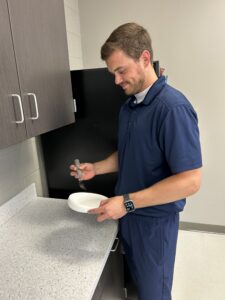
Tyler’s Role at Amherst Manor
Now in his third year at Amherst Manor, Tyler serves as the lead COTA. He treats a wide range of patients, from skilled rehabilitation to long-term care and outpatient therapy, addressing needs from neurological and orthopedic to cognitive and cardiovascular.
Gabriel Pou, PT, DPT, Director of Rehabilitation at Amherst Manor, praised Tyler’s leadership: “When we were facing an unusually high workload period for over six months, he essentially did the work of two therapists in a very busy building. He steps up whenever needed.”
One of Tyler’s standout contributions is leading Amherst Manor’s Dementia Live exercise classes. “After one session, the patients and caregivers gave him a standing ovation,” Pou shared.
Despite balancing a full workload, graduate studies, and personal life, Tyler shows up each day with a positive attitude. “He treats every resident as if they were his own family,” Pou said.
Looking Ahead
Tyler is currently pursuing his Master’s in Occupational Therapy at Muskingum University, where he looks forward to increased autonomy in developing patient care plans. “I’m excited to collaborate with patients on goals that are truly meaningful to them,” he said.
His advice for prospective OTA students is simple: “Keep an open mind. Helping people is great, but being open in how you approach that help will make you more effective.”
For Tyler, the role of a COTA is far more than what meets the eye. “We are primary advocates for our clients and vital collaborators with OTs to ensure the best outcomes,” he explained.
From STNA to respected therapy leader, Tyler’s journey embodies the mission of both Sprenger Health Care Systems and the EHOVE/LCCC OTA Program—to empower professionals who make a lasting difference in the lives of those they serve.
Sprenger Health Care Systems Honors Long-Term Employees at Amherst CelebrationOn July 11, 2025, Sprenger Health Care Systems hosted its Years of Service Celebration in Amherst, Ohio. It honored employees whose decades of dedication have shaped the company’s success. The event celebrated long-term team members—showcasing an extraordinary level of loyalty and commitment in senior care.
The afternoon featured activities designed to bring staff together and create lasting memories. Employees enjoyed duckpin bowling, rides on the Euclid Rocket Car, and a special lunch. It took place in Amherst, the city where Sprenger Health Care Systems was founded. Each honoree received a personalized gift in recognition of their exceptional contributions.
Anthony and Donel Sprenger, each with over 50 years of leadership in the family-owned company, received special acknowledgment. Their leadership continues to guide Sprenger’s mission of providing compassionate, personalized care across Ohio and South Carolina.
Founded in 1959, Sprenger Health Care Systems has grown into a leading provider of skilled nursing, assisted living, independent living, memory care, hospice, respite care, and short-term rehabilitation. The Years of Service Celebration highlights the company’s commitment to employee appreciation and its belief that long-term staff are essential to delivering high-quality senior care.
Healthy Living Through Movement: Water Aerobics for SeniorsStaying active is one of the most important ways older adults can support their overall health, mobility, and well-being. At Sprenger Health Care Systems, we’re proud to offer a safe, low-impact, and enjoyable way for eligible residents to stay fit — water aerobics!
Why Water Aerobics?
Water aerobics is an ideal exercise option for older adults because it combines the health benefits of physical activity with the therapeutic properties of water. In the pool, your body becomes lighter, reducing the impact on bones and joints. This makes it a comfortable and accessible form of exercise for individuals with arthritis, limited mobility, or those recovering from injury.
Benefits include:
- Improved Flexibility and Balance: Water’s natural resistance encourages better range of motion and reduces the risk of falls.
- Enhanced Circulation and Heart Health: Gentle aerobic movement supports heart function and decreases swelling.
- Reduced Joint Pain and Stiffness: Warm water helps soothe muscles and ease discomfort.
- Mental Wellness and Social Connection: Group exercise boosts mood and promotes a sense of belonging.
- Increased Strength and Endurance: Build stamina and muscle tone without the strain of land-based workouts.
No prior swimming experience is required. All exercises are performed in shallow water and led by board-certified therapists who are there to guide, encourage, and modify movements to fit each individual’s needs.
What to Expect in Class
Each session is designed with our senior residents in mind and includes:
- Gentle warm-ups
- Stretching and movement
- Low-impact cardio routines
- Relaxing cool-downs
Classes are conducted in a warm, welcoming environment where everyone is encouraged to participate at their own comfort level.
Class Details
This class is open to Independent Living and Town Center Condo residents only.
When: First and third Wednesday of each month
Time: 10:00 AM – 11:00 AM
Where: The Independent Clubhouse
200 Community Drive
Avon Lake, Ohio
Our indoor heated pool ensures a pleasant experience no matter what the weather is like.
Cost: Free of charge
Questions?
For more information, please contact:
James West
Director of Rehabilitation
(440) 396-4471
jwest@sprengerhealthcare.com
We look forward to helping you move toward better health — one gentle splash at a time!